From Silent Screens to Sound Film in East Asia
From silent screens to sound film in East Asia, see how recorded voices, music, and performance changed storytelling without erasing silent cinema’s visual craft.
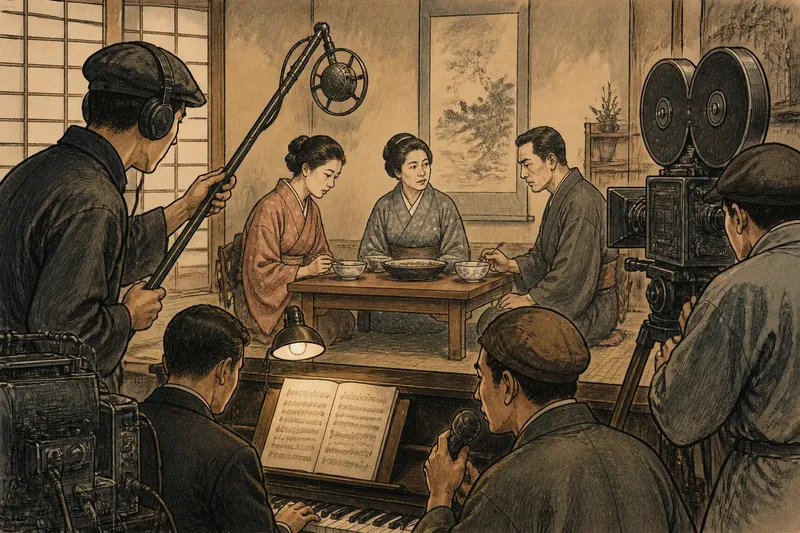
The easiest mistake is to treat sound film as silent cinema with dialogue added. From silent screens to sound film in East Asia, the change was more basic: filmmakers could coordinate recorded speech, music, and effects with images, changing how a scene carried meaning.
What could silent cinema already express?
Silent cinema was not a succession of pictures waiting for speech. Performers used gesture, posture, and facial expression to make intentions legible. Editing could connect a look to an object, then let the audience infer what a character felt. Intertitles supplied dialogue or context, but they were only one part of the storytelling system.
Screenings could also include music played in the theater, narration, or other local practices. In Japan, benshi performers were known for narrating films and giving voice to characters during screenings. The experience varied with the venue and its performance traditions. “Silent” describes the film’s recorded image track, not necessarily a room without sound or speech.
That distinction matters when comparing cultures. Sound entered film traditions that already had ways to guide attention, interpret action, and make a screening feel communal. It did not simply fill an empty space.
What changed when filmmakers recorded voices?
A recorded voice could belong unmistakably to a character on screen. Conversation became a dramatic resource: a filmmaker could shape a scene around hesitation, overlapping speech, a change in tone, or words that contradicted a character’s face. Silence, too, could become expressive because it now sat beside audible speech.
Music could be recorded in relation to particular scenes and moods. A recurring tune might connect moments or evoke a character without another explanatory title. Yet music did not become meaningful simply by being present; its timing and relation to the image mattered.
Sound also changed performance. Actors had to work with microphones and recording conditions, and early sound production could constrain movement or camera placement. A scene might hold on a speaking performer rather than cut rapidly among faces. These adjustments did not end visual acting: a glance could still carry a thought before anyone spoke.
How did sound reshape a scene’s rhythm?
Dialogue offered directors and actors new ways to shape a scene, but it also required a rhythm that did not feel like stage conversation placed in front of a camera. A pause could mark uncertainty, courtesy, or anger; a line delivered too quickly or too carefully could alter the same exchange. The image still mattered, because posture and expression could support or challenge what was said.
Imagine a family supper in which one person avoids answering a question. In a silent version, the film might linger on an untouched bowl and the family’s exchanged looks, with an intertitle supplying the question. In a sound version, a spoon scraping the bowl or a reply that trails off could make avoidance audible. The plot stays the same, but the scene’s tension comes through different cues.
It is not worth treating every early sound film as a technical milestone to admire for its equipment. A more useful viewing choice is to notice how a particular film joins image, voice, music, and movement to tell its story.
Why did the transition take different forms?
Sound filmmaking required equipment, trained crews, recording facilities, and theaters able to play sound films. Those practical conditions shaped what filmmakers could make and where audiences could see it. The shift was uneven rather than a single switch across East Asia.
Language mattered, too. Spoken dialogue could make regional speech, social position, or intimacy more specific, while raising new questions about who could understand a film. In multilingual settings, speech might enrich a character’s identity and complicate a film’s reach. Local screening customs and production conditions added further differences.
What should you notice in an early sound film?
Does dialogue explain the image or complicate it?
Notice whether a character’s words match their expression or pull against it. That gap can suggest embarrassment, concealment, or a difference in what people know.
How does music relate to the scene?
Notice whether music accompanies a character, bridges a transition, or stops at a charged moment. Its absence can make an ordinary gesture feel exposed.
What does a pause add to the exchange?
A pause may signal uncertainty, courtesy, anger, or a turn in the conversation. Compare it with the character’s posture and the words that come before and after.
Which elements carry the story’s emotion?
Watch how expression, gesture, speech, and music share the work. If one element carries the feeling while another supplies context, the scene may be asking you to hold both in mind.
How can silent and sound storytelling coexist?
The transition did not erase silent cinema’s visual intelligence. Sound films could still rely on composition, gesture, and editing, while silent-era screenings could include live voices and music. The boundary is best understood as a change in what filmmakers could record and coordinate, not as a division between primitive images and fully expressive cinema.
That perspective makes the move from silent screens to sound film in East Asia easier to appreciate without flattening regional differences. Notice whether a voice carries social nuance, music links separate moments, or an unspoken look holds a scene together. The most revealing detail may be the element that briefly takes over from all the others.